The Best Databases for Modern Applications: A Complete Architecture Guide
Creating a rock-solid software architecture has never been more of a balancing act. Development teams are always on the hunt for the best databases for modern applications so they can comfortably handle surging data volumes, support global users, and keep up with lightning-fast release cycles.
Picking the wrong data store, however, is a quick ticket to frustrating performance bottlenecks, messy data integrity, and cloud bills that go through the roof. When an app suddenly chokes under a traffic spike or suffers from noticeable lag, the underlying database setup is usually the culprit.
In this guide, we’ll unpack the biggest hurdles involved in choosing a database. From there, we’ll dive into today’s leading relational, NoSQL, and NewSQL options, while sharing some practical tips to help you fine-tune your tech stack.
Why Selecting the Best Databases for Modern Applications is Challenging
Today’s apps are expected to do it all: stay highly available, scale horizontally on a dime, and juggle wildly different types of data at once. The main headache for engineers usually comes down to the classic CAP Theorem—trying to find the perfect compromise between consistency, availability, and partition tolerance.
In the past, monolithic systems simply dumped everything into one giant relational database. But the massive shift toward microservices, containerization, and modern cloud computing solutions has made “polyglot persistence” the new normal. Instead of shoehorning every piece of data into a single, one-size-fits-all system, teams are now picking distinct, purpose-built databases that actually fit their specific workloads.
On top of that, modern software pumps out mountains of unstructured data. Whether it’s user-generated content, steady IoT telemetry, or endless streams of real-time logs, trying to force all that noise into rigid relational tables just slows developers down and hurts performance. That’s exactly why specialized data stores have become an absolute necessity.
Basic Solutions: Top Relational Databases
When your project demands rock-solid ACID (Atomicity, Consistency, Isolation, Durability) guarantees, Relational Database Management Systems (RDBMS) are still the undisputed heavyweights. Here are the most dependable options for building a stable foundation:
- PostgreSQL: Many consider this the most advanced open-source relational database on the planet. It stretches far beyond basic SQL, bringing heavy-hitting features like Multi-Version Concurrency Control (MVCC) and deep support for complex queries. Thanks to its handy JSONB indexing, you can even query semi-structured data without having to spin up a separate NoSQL system.
- MySQL: If you’re building a read-heavy web app, MySQL is a universally trusted choice. It already drives massive platforms and content management systems like WordPress. With an enormous community ecosystem and reliable performance, it’s a remarkably safe bet for traditional workloads.
- MariaDB: Originally born as a drop-in alternative for MySQL, MariaDB brings a lot to the table. It boasts smarter query routing, enhanced storage engines (such as Aria and InnoDB), and the peace of mind that comes with true open-source community governance.
- SQLite: While it has a long history as a local development tool, SQLite is currently enjoying a huge comeback in the serverless and edge computing spaces. Thanks to clever new tooling, developers are now distributing SQLite databases globally, unlocking ultra-low latency reads right at the network’s edge.
Advanced Solutions: NoSQL and Purpose-Built Databases
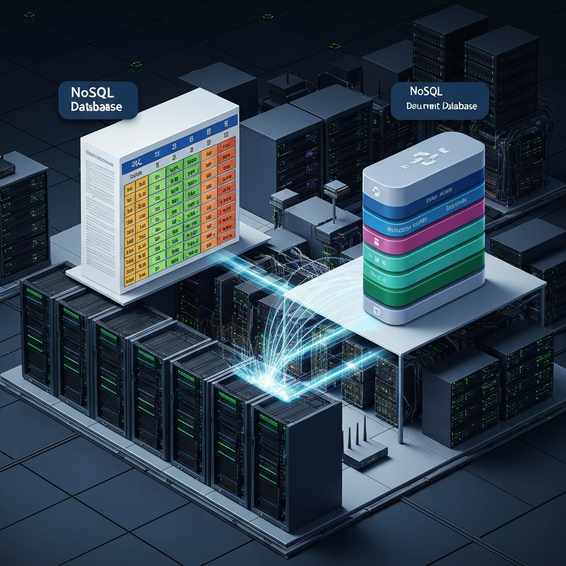
As soon as you hit the need for massive scale, on-the-fly analytics, or highly flexible schemas, traditional RDBMS options might not cut it. From a DevOps and engineering standpoint, the following advanced databases are lifesavers because they offer seamless horizontal scalability right out of the box.
1. MongoDB (Document Store)
By storing information in flexible, JSON-style documents, MongoDB keeps things exceptionally developer-friendly. It’s a perfect fit for sprawling product catalogs, content management systems, or any app where your data structure is constantly changing. Plus, its native sharding makes horizontal scaling feel like a breeze.
2. Redis (Key-Value Store)
Redis operates entirely in-memory, making it unbelievably fast. You’ll typically see it deployed as a session manager, a message broker, or a dedicated caching layer. If your main database is starting to sweat under heavy read traffic, slotting Redis in to handle frequent queries is one of the smartest architectural upgrades you can pull off.
3. Cassandra (Wide-Column Store)
Originally cooked up at Facebook, Apache Cassandra was built from day one to juggle colossal amounts of data across multiple commodity servers. Because it promises high availability without a single point of failure, it’s the standard go-to for IoT applications, time-series data, and tracking massive waves of user activity.
4. CockroachDB (NewSQL)
Sometimes you really want NoSQL’s horizontal scaling, but you absolutely cannot afford to lose strict SQL ACID guarantees. Enter CockroachDB. Custom-built for global, multi-region cloud environments, it’s famous for being practically indestructible—capable of surviving even total data center outages.
Best Practices for Database Optimization
Of course, picking the right database engine is really just day one. To keep performance high and your data locked down, you need solid configuration, active monitoring, and a proactive maintenance routine.
- Implement Connection Pooling: Tearing down and spinning up a new database connection for every single request is a massive waste of resources. By dropping in a connection pooler—like PgBouncer for PostgreSQL—you can efficiently manage those active connections and keep your server from burning out.
- Optimize Indexing Strategically: Make it a habit to check your slow query logs. Once you spot bottlenecks, create targeted indexes on the columns you query most often. Just don’t get too trigger-happy; over-indexing will quickly drag down your write speeds and eat into your storage budget.
- Leverage Read Replicas: Give your primary database a break by shifting heavy read traffic over to replicas. This simple move ensures that clunky analytics queries or dashboard refreshes won’t step on the toes of your vital transactional writes.
- Enforce Zero-Trust Security: Data should always be encrypted, whether it’s sitting at rest or moving through the network via modern TLS standards. Put strict role-based access controls (RBAC) in place, automate your credential rotation, and whatever you do, keep your database entirely off the public internet.
- Automate Backups and Disaster Recovery: Tie automated, point-in-time recovery (PITR) backups right into your CI/CD workflows. More importantly, actually test your restore processes regularly. If ransomware hits or a server dies, you want to know for a fact that you can recover in minutes.
If you’re looking for a deeper dive into structuring resilient backends, be sure to check out our extended guides covering modern database architecture and DevOps automation.
Recommended Tools and Resources
Managing, deploying, and scaling databases doesn’t have to be a nightmare if you take advantage of managed cloud services (DBaaS). Here are a few top-tier platforms that DevOps engineers frequently recommend for modern projects:
- Amazon RDS & Aurora: AWS brings fully managed relational setups to the table. They handle the heavy lifting with automated patching, out-of-the-box high availability, and painless read replica scaling.
- Supabase: This has become a massive favorite for teams looking for an open-source Firebase alternative. Powered completely by PostgreSQL, it hands you real-time subscriptions, built-in authentication, and instant APIs.
- DigitalOcean Managed Databases: If you want to run PostgreSQL, Redis, or MySQL without getting tangled in AWS’s notoriously complex web, DigitalOcean offers a budget-friendly, highly intuitive alternative.
- Upstash: A fantastic serverless platform that gives you Redis and Kafka with a scale-to-zero pricing model. Because you only pay for exactly what you consume, it’s an absolute dream for modern edge applications.
Frequently Asked Questions (FAQ)
What is the most popular database for web applications?
MySQL and PostgreSQL almost always take the crown when it comes to web applications. Their lasting dominance really boils down to three things: decades of passionate open-source support, ironclad reliability, and seamless integration with popular web frameworks like Next.js, Laravel, and Django.
Should I use SQL or NoSQL for a new startup project?
Honestly, your best bet is to start with a standard SQL database like PostgreSQL unless you have a glaringly obvious reason not to. Relational systems are incredibly versatile, keep your data clean, and effortlessly handle about 95% of everyday use cases. You should really only pivot to NoSQL if you’re dealing with rapidly changing schemas, processing massive walls of unstructured data, or requiring complex global horizontal scaling.
How do I handle database schema migrations with zero downtime?
Pulling off a zero-downtime migration takes a bit of a choreographed dance. First, you introduce the new schema without touching the old one. Next, you tweak your application so it double-writes to both schemas simultaneously. From there, a background worker can safely backfill the older historical data. Once everything looks good, you route your read operations over to the new schema before finally retiring and deleting the old one.
What exactly is a NewSQL database?
Systems like Google Cloud Spanner and CockroachDB fall under the NewSQL umbrella. They are essentially modern relational databases engineered to give you the best of both worlds. You get the effortless horizontal scaling normally reserved for NoSQL platforms, combined with the reassuring, strict ACID guarantees you expect from a traditional relational database.
Conclusion
Pinpointing the best databases for modern applications takes a genuine understanding of what your workload actually demands, how it needs to scale, and the shape of your data. Tried-and-true relational systems like MySQL and PostgreSQL will always be excellent foundational picks. However, mixing in specialized NoSQL tools like Cassandra, Redis, or MongoDB can give you a massive performance boost when dealing with specific, resource-heavy tasks.
At the end of the day, a successful architecture relies on looking closely at your read-to-write ratio, matching the tech to your team’s expertise, and leaning into managed DBaaS providers to cut down on busywork. By mixing the right database technologies with a strict dedication to optimization best practices, you’ll be well on your way to building a high-performance backend that’s ready for whatever the future throws at it.
About the Author